NEON SWING: MASTER THE ART OF SWINGING THROUGH NEON WORLDS
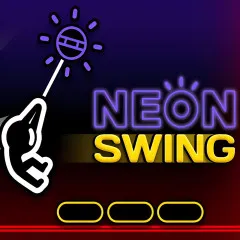
Neon Swing is a high-energy physics based platformer that combines the classic "grappling hook" mechanic with a vibrant, retro-futuristic aesthetic. You take control of an agile stickman navigating a dangerous landscape of neon hooks and lethal barriers. This game challenges players to master gravity and centrifugal force to glide through the air like a digital Tarzan. Jump in now and swing through neon worlds as you master gravity and reach incredible distances!
Highlight Features
- The game’s striking palette creates an immersive, high-contrast world.
- Every swing, release, and jump feels authentic.
- Orange blocks and trampolines act as tactical tools.
- Various stickman characters, each bringing a unique look to their high-flying adventures.
MASTER THE PERFECT NEON SWING ARC
The objective in Neon Swing is simple yet demanding: travel as far as possible by swinging from one neon bar to the next. You need to calculate the perfect arc to launch yourself toward the next anchor point. Missing a connection means a fatal fall to the bottom of the screen. Besides, "Red Barriers" are instant-death traps; touching them immediately ends your round. You have to navigate either around them or over them using trampolines. Moreover, breaking orange blocks during your run provides a speed boost, helping you build the momentum necessary to clear wider gaps and reach distant checkpoints.
Instruction to Play
- Click to latch onto the nearest neon hook.
- Hold the button to swing back and forth, building up power and momentum.
- Release to make your stickman release the rope and fly forward.
Tips to Play: Mastering the Arc
- Master the Release Releasing at the lowest point of your swing gives you maximum horizontal speed.
- Yellow trampolines can help you gain height, but a bad collision can launch you backward into a red wall.
- Only go for orange blocks if it doesn't compromise your safety.
OTHER INTERESTING PHYSICS GAMES YOU SHOULD TRY
These games all emphasize timing, momentum, and physics-based control: